
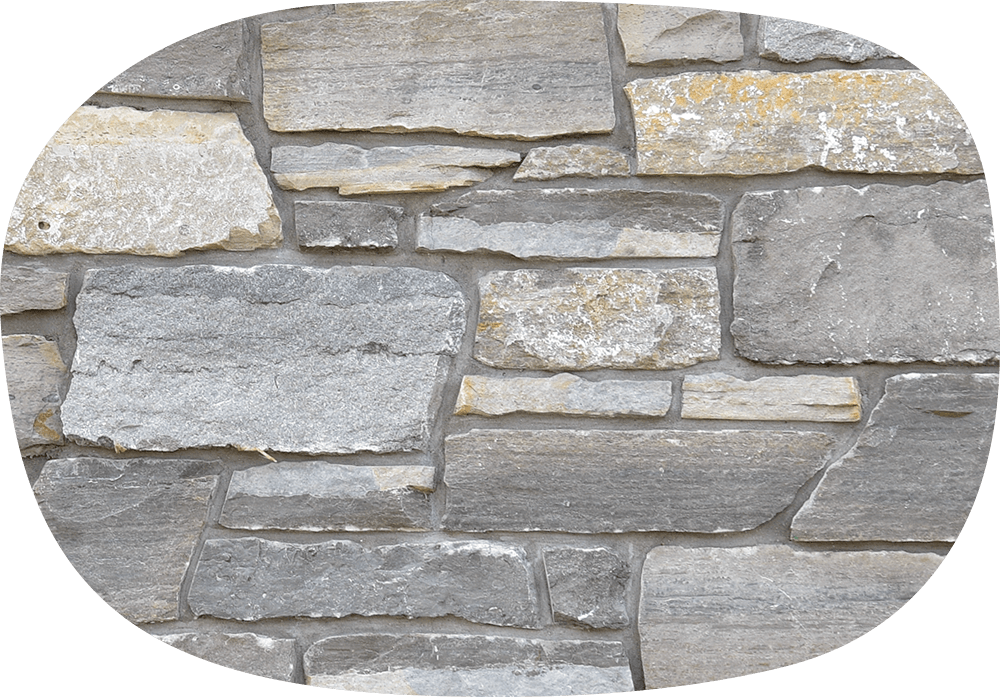
Where Michigan goes looking for more winter.
Most of the state spends February waiting for it to be over. Then there are the people who check the forecast, see more snow up north, and start loading the trailer on Thursday night. Iron Mountain is who those people are driving toward — hills that hold snow into April, a ski jump you can see from the highway, and a trail system that keeps going well past wherever you meant to turn around. You come off the sleds at noon with your face burned by the cold and eat a hot lunch with everybody’s helmets stacked on the table.
The town is up there in the first place because of what was under it. They pulled iron out of that bluff for the better part of a century, and the stone still carries it — deep iron grays, warm rusts, and the occasional flash of color that only shows up when the light hits right. It was made under pressure and it looks like it.
This is not a background stone and it should not be asked to be one. Put it where the architecture can carry a strong material — heavy timber, big rooflines, a chimney meant to be the first thing anyone sees from the road. On a delicate elevation it will win the argument.
Blend specifications.
- Full-bed: 3.5-4.5 inches
- Thin veneer: .5-1.5 inches
Available in two cuts.
Color and product weight, height, typical piece change from cut to cut. Everything else is identical.
Iron Mountain Ashlar
4-8 INCHES (AVERAGE OF 6 INCHES)
- Full-bed: 35-40 square feet/ton
- Thin veneer: 10-14 pounds/square foot
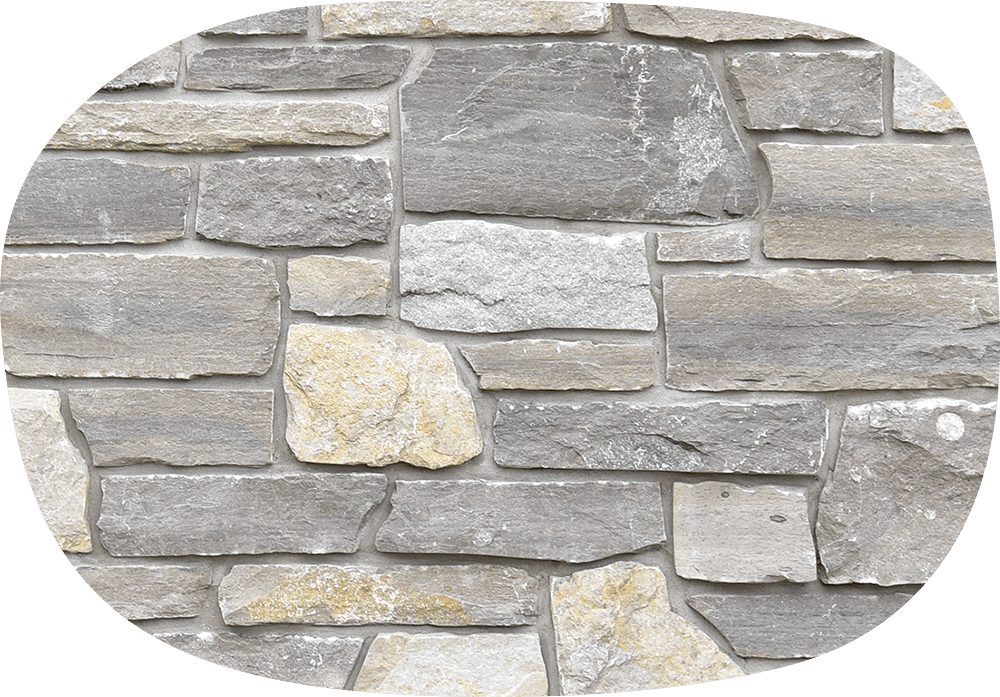
Iron Mountain Field Ledge
1-4 INCHES (AVERAGE OF 3 INCHES)
- Full-bed: 35-40 square foot/ton
- Thin veneer: 10-14 pounds/square foot
Please note: the beauty of natural stone is in its variety and range of color. Small pictures and samples are not fully representative. We do not recommend making a selection based on pictures alone — request a physical sample.
Hold it before you decide.
Request a sample.
Physical sample shipped to you. No obligation, no pressure.