
Technical FAQ
Is natural stone veneer different
from manufactured stone?
Yes. Manufactured stone is pigmented concrete cast in molds. Natural veneer is quarried rock sawn thinner.
Both are called stone veneer and both go on a wall as an adhered system, so the terms get used interchangeably. They are different materials, and the difference shows at specification and on the wall.
Side by side
| Natural thin veneer | Manufactured stone | |
|---|---|---|
| Made from | Quarried limestone, granite and fieldstone | Portland cement, lightweight aggregate and iron-oxide pigment |
| Shape | Split and sawn from the rock | Cast in molds taken from real stones |
| Color | The mineral itself, through the full piece | Pigment, which leading makers apply by hand to the face |
| Across a wall | No molds, so no repeated faces | A finite set of molds, so faces recur |
| Standards | Tested as dimension stone: ASTM C97, C170, C880 | ASTM C1670 for units, C1780 for installation |
| Weight | Our limestone: 10–14 lb/sq ft | Industry criteria cap it at 15 lb/sq ft saturated; often lighter |
| Installed cost | Higher | Lower. One leading brand puts it at a third to half the cost of natural stone |
Color
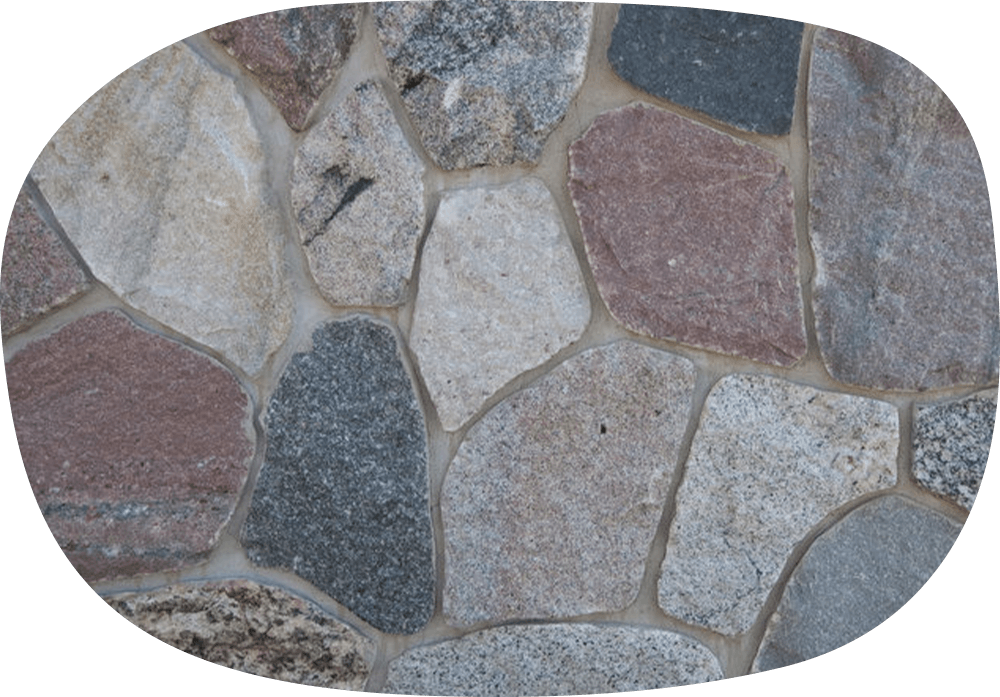
In natural stone the color is the mineral itself, running through the full depth of the piece. A chip, a field cut, or a corner return exposes more of the same stone.
In manufactured stone the color is pigment. Leading makers describe their stone as hand-colored or hand-painted piece by piece — real craft, applied to concrete. A chip or a field cut can expose the body of the casting underneath.
Repetition
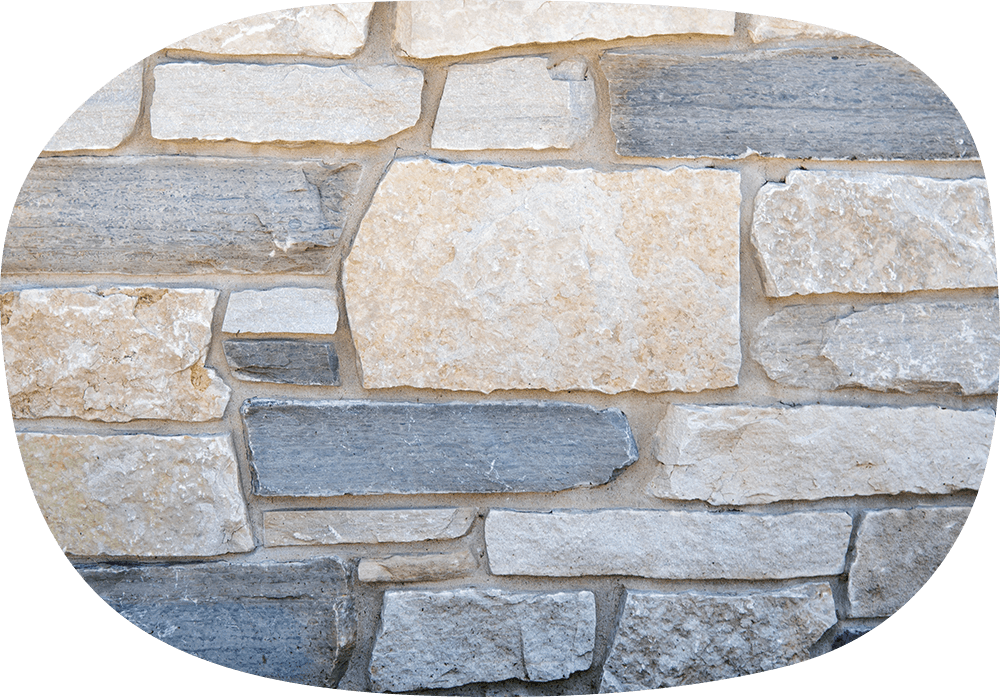
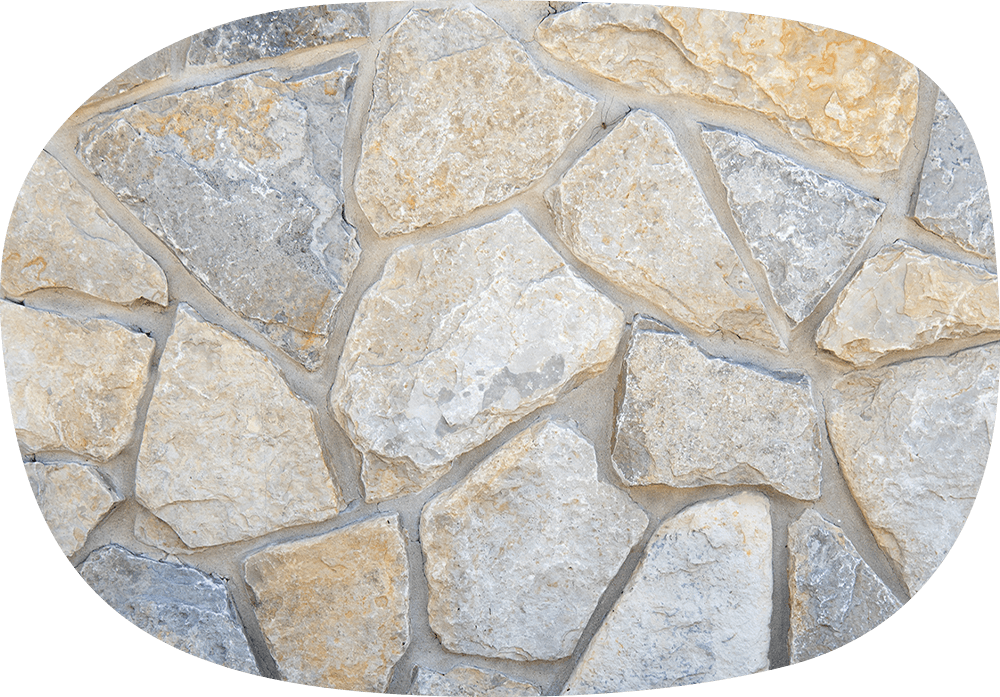
Molds are a finite set. Across a large elevation the same faces recur, and the eye finds the pattern from the road even when it cannot name it. There is no mold in natural stone — each piece was shaped by the geology it came out of.
Weight and cost
These are manufactured stone’s real advantages, and it is fair to say so. It is cast light, and it costs less installed. Natural thin veneer closes most of the weight gap — our limestone runs 10 to 14 lb/sq ft, within the limit for adhered veneer — but it does not close the price gap. How much does natural thin stone veneer weigh?
Water and the wall behind it
Both are adhered systems, and both depend on the wall behind them. Home inspectors have reported widespread water damage behind manufactured stone, most often traced to missing flashing and drainage details rather than to the units themselves. Those details matter just as much under natural thin veneer. Where the two differ is the unit: our stone absorbs 0.15% to 0.32% of its weight in water under ASTM C97.
In the submittal
They fall under different standards. Manufactured stone veneer units are governed by ASTM C1670, with installation covered by ASTM C1780. Natural thin stone veneer is covered by neither. Our stone is tested to ASTM C97, C170 and C880 by Driesenga & Associates, and those reports are available with the document set.
None of this is a criticism of manufactured stone as a product. It is a different material with different economics, and it has its place. It is simply not the same material, and a submittal that treats the two as interchangeable will not hold up under review.
The next step
See it in person
before you decide.
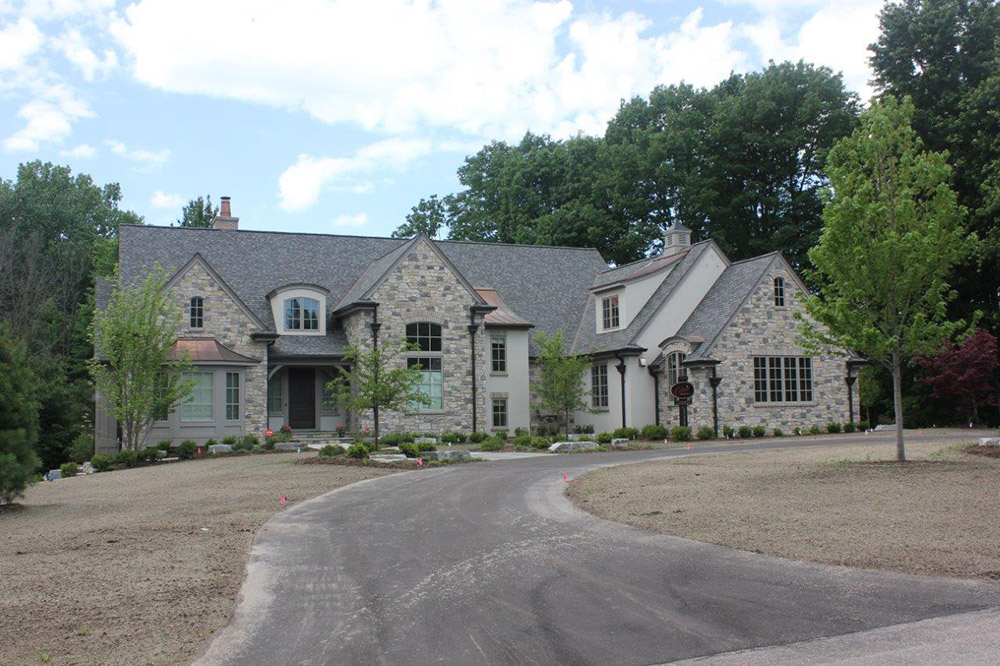
The difference is easiest to judge up close. Contact us for more information on any blend.